
Image and Text contributed by Annie Zaidi, Mumbai
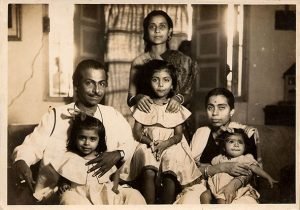
My brother Aman Zaidi and I spent about a year living with our maternal grandparents in Lucknow, while our mother was in the hostel in Aligarh Muslim University (AMU), trying to finish her Masters.
I was about two and a half years old, hence my memories of this phase are dim. But I was deeply attached to my grandma and was perpetually tailing my big brother, Aman. I also have vague memories of trying to play ‘Kabaddi‘ with his friends.
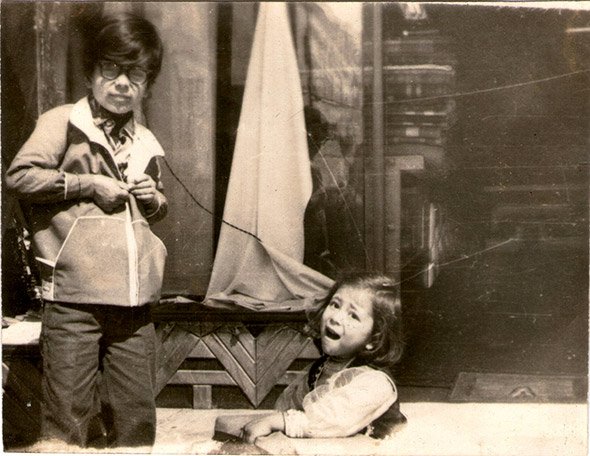
This photograph was taken on Aman’s seventh birthday by my father, and Aman had just been gifted his first bicycle. He learnt to ride it the same day. Since I was not gifted a bike until I was much older, I never did learn to ride one and still can’t.
Our father had taken us to Hazratgunj, the poshest market in town, perhaps for a treat. I have no idea why I’m making that face – perhaps annoyed at being asked to pose too long. Another colour photograph of this day tells me that my brother was wearing a smart, red jacket and it matched his brand new Red bike. I was wearing a Pink Anarkali styled kurta with a little black embroidered ‘Koti‘ (sleeveless jacket). It was a baby version of the costume that female qawwals in Hindi movies of the 50s & 60s were often seen in.
This day – or at least, this outfit – should have been memorable, my family tells me. We were visiting my bua (father’s sister) and she had a pet dog. I had never seen a pet dog before, but I was not afraid. I was told that the dog would only try to ‘kiss’ me and sure enough, he did. He licked my face, so I promptly returned the courtesy. I licked the dog right back! Needless to add, my family hasn’t stopping teasing me about it since 1982.
My favourite memories are rooted in Lucknow, and many of them involve Hazratgunj, or just Gunj as we call it. It was the poshest market in town. My college-going aunts would often go ‘gunjing‘ (a term Vikram Seth used in his novel, A Suitable Boy, setting it in a fictional city on the banks of a river). Gunjing did not necessarily translate to shopping. My aunts would take a cycle-rickshaw or rode a Moped to Gunj, and waffle around. And sometimes we’d go along. There were some glass-fronted stores, so they window-shopped. They bought ‘churan’ and roasted peanuts. Later, there would be great joy and family chatter around a pile of peanuts, cracking shells and licking bits of ‘kala namak‘ (Black Indian salt).