Image and Narrative contributed by Tillotama Shome, Mumbai
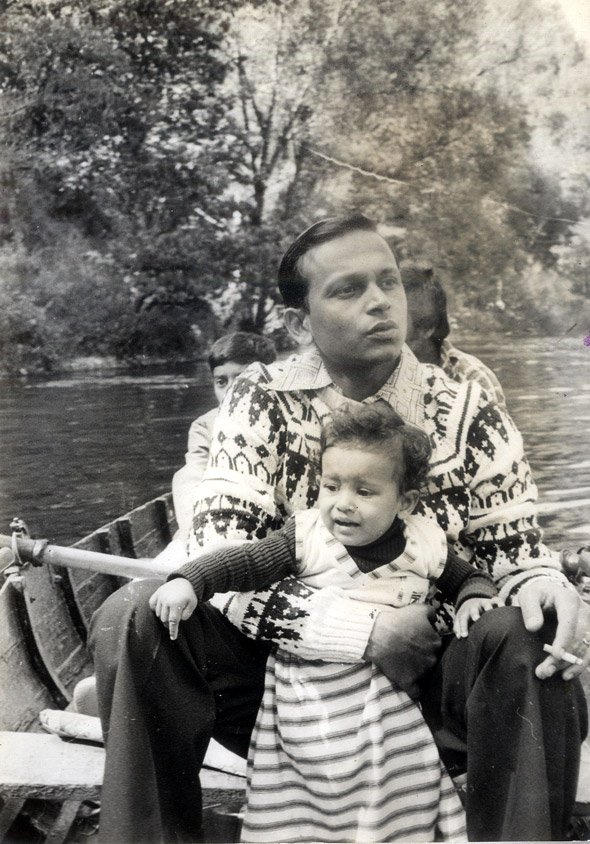
In the early 80’s we lived in Rajbagh extension, near Zero Bridge in Srinagar, Kashmir.
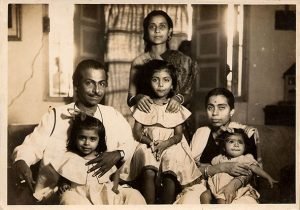
I was four years old and on my way to school with my father Anupam Kumar Shome. He was an Airforce officer. En route to school we got stuck in traffic. Apparently, there was a ‘shoot out’ up ahead. As the police cleared the traffic and guided us, I saw through the arches of crowded human legs, a body of a dead man, drenched in blood. The contrast of the red blood against white of snow was inexplicable and I was witnessing the lifelessness of death for the first time.
My father shepherded me back home. His face was gaunt and I kept crying all the way back home. The same day he took me out for a ride in a boat and suddenly said, “You saw what happened today? It is all because of religion.”
I had no idea who religion was, the names of religion’s parents, where he or she lived, what he or she did for a living, why he or she killed that man or did not save him. I was only four. I just cried.
Because of what he may have seen and experienced, I think my father had come to a conclusion and a decision that religion brings grief, so Hindu spiritual ceremonies or references like Pujas, pundits, shradhs, kundli (astrology), and havans were never a welcome guest in our household. My religion or requirement of some faith, became the need to be aware of the consequences of my actions, my thoughts and even my memories. I think which is why, many decades later, before I became an actress, I decided to go and work at a girls orphanage in Kupwara, Kashmir despite the extremely tense situations at the border, and against the advise of many others, including my father.
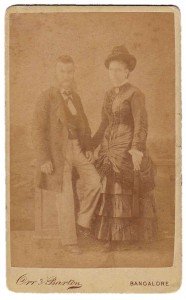
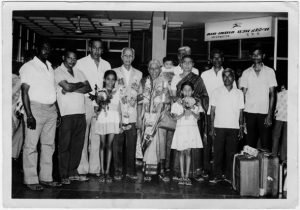
My memory of that dead man, my love for Kashmir, the beautiful memories held in photographs of our time in Srinagar became the mental armor that helped me. And that armor remained intact when we were questioned by militants at gunpoint. Fear of death at that moment was fogged out, as all I felt at that moment, was that the Militant holding a gun was just a few years older than I was when I saw a man die for the first time.
I felt sad for him and lucky that I had a privileged childhood. Our memories hold a key to our future in ways that can surprise us. Luckily, it sure did surprise me.
One Response
Dear T’tamma,
Surely you know your colours. The white of snow and red of blood. The sharp contrasts of your fortunate upbringing as against that of the young militant. Religion, faith and the fresh need of a new understanding.. the inexplicability of it all..the crowd of memories ..You can look back with love and pain!!!Imagination, such as yours prompts: envy.
But, then. As you looked back from under the arches of several human legs did you recreate a past, more surreal !? How honest were you to that little child who saw a body lying down like any other before Perhaps, sleeping in the cold. You moved on and quite forgot about it ! Did religion come up only then and that is how you remember it all! The gift of creation must, pray, respect history and its reveries.