IMP Logo
Family Pix low
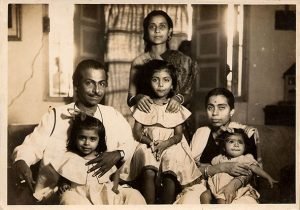
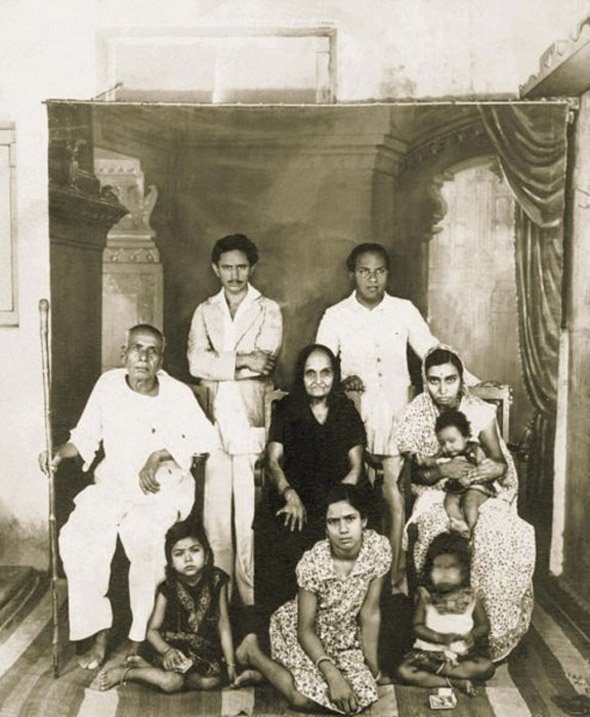
My Grandfather (sitting, left) Narasinhbhai Patel with family. According to British Indian records, he was 'the most dangerous man in Bombay Presidency'. Anand, Kheda District, Gujarat. Circa 1940

Image and Narrative contributed by Sandhya Mehta

My maternal grandfather, Narasinhbhai was a revolutionary man. Records of British India describe him as ‘most dangerous man in Bombay Presidency ‘. He was exiled from British India for writing proscribed books. Though the Maharaja of Baroda clandestinely supported him. After completing his exile term in Germany and East Africa, C.F. Andrews persuaded him to join Ravindranath Tagore in Shantiniketan . He taught German there for a short time and then returned to his native town Kheda to support Gandhiji’s Salt Satyagraha . He became a leader in Kheda district. to mobilise Satyagraha. Standing behind him, first from left is his grandson Dr. Shantibhai Patel who also actively participated in the freedom struggle and later became a successful scientist . Narsinhbhai’s daughter, Shanta Patel (my mother), sits, first from right with my father G.P.Patel, standing behind her. My father, G.P Patel supported Narasinhbhai’s views, work and philosophy. They all were followers of Gandhiji.
Leave a Reply

Your email address will not be published. Required fields are marked *

This site uses Akismet to reduce spam. Learn how your comment data is processed.

Categories

STORY SUBJECTS

MORE STORIES

/ USAGE GUIDELINES

No image or text may be used or published elsewhere without prior permission. Any unauthorised use may lead to prompt legal action. Permission requests can be sent to hello@indianmemoryproject.com

• Image rights belong to the guardian(s) of the photograph.
• Text rights belong to Indian Memory Project unless stated otherwise.
• The project does not share any information about contributors without their explicit permission.

We hope you enjoy this archive as much as we enjoy building it.

/ CIRCLE OF PATRONS

A culture’s memory survives because a few understood that their stories were worth keeping.

Our Circle of Patrons are the people who carry that understanding forward — whose support allows us to seek out, document, and preserve personal histories that would otherwise disappear. Their generosity has helped build an archive that now reaches schools, institutions, researchers, and families across the Subcontinent and the world.

This is quiet, lasting work. And it has been made possible with people like them. If you’d like to become a patron of the project please write to us at hello@indianmemoryproject.com

SUBSCRIBE TO RECEIVE THE BEST STORIES AND NEWS FROM INDIAN MEMORY PROJECT

MENU

COMPANION WORKS