Image and Narrative contributed by Simon Digby, UK
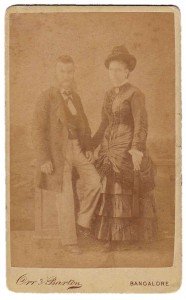
My grandfather, George O’Brien, was born in Meerut in 1900. His grandparents had fled Ireland in 1847 to escape the Great Potato Famine. My great great grandfather then joined the British army and the family moved to India. In India, they became part of the Irish diaspora, but they were alive and being fed by their old enemy, the British.
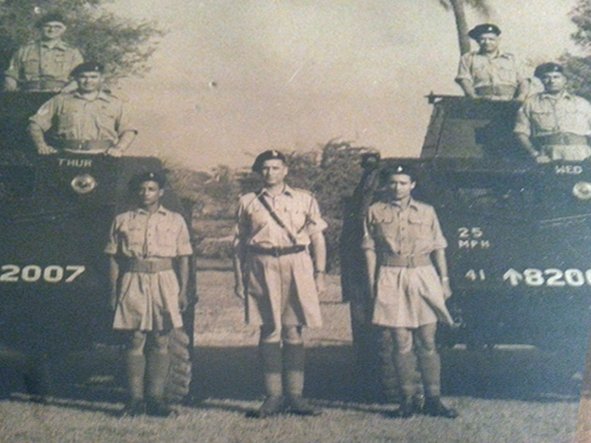
During the Second World War, my grandfather volunteered to be the Indian Home Guard. He had his own platoon of part timers whose role was to keep the peace and defend India against her enemies. At the end of the war, the platoon was retained to maintain order as Indian Pakistan Partition was tearing the country apart.
In September of 1947, thousands of displaced Muslims were taking refuge in the Purana Qila in Delhi and were extremely agitated as they feared attacks on their journey to Pakistan. Mahatma Gandhi heard of their terror and drove to the fort to allay their fears. The crowd listened to their leader, but a more agitated group worked themselves into a frenzy and started to attack Gandhi’s car. My grandfather’s platoon had been called to the incident and arrived to see the mob smashing the car windows and shouting violent threats. I am told my grandfather, George climbed on top of the roof of Gandhi’s vehicle and shouted in Hindi, “This is the only man that can save you!” and managed to placate the crowd long enough to get the car out.
Unfortunately, Gandhi was assassinated the following January. A great global leader was lost, but my grandfather George O’Brien had played his small part in history. My grandfather told me that a reporter called Ralph Izzard (a famous Daily Mail hack) wrote an article which appeared in The Times titled, ‘Mad Irishman saves Gandhi‘. Unfortunately, I have not been able to track the article down because he never told which ‘Times’ it was; The Times of India or The London Times or another Times!), and my Grandfather was too modest to keep a copy for himself. But his story concurs with Gandi’s visit to the Purana Qila on September 22, 1947.
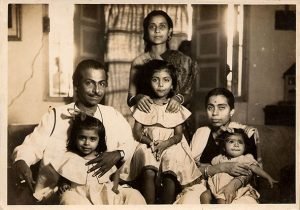
My Grandfather spent his whole life in India living in Delhi & Meerut. He was born in 1900 and died in 1986. He married Sheila Gately, my grandmother who was of Irish lineage too. Sheila’s brother Michael Gately won a gold medal at the 1928 Amsterdam Olympics playing field hockey for India with Dhyan Chand, the legendary player, on the team
After leaving his job as a home guard, he worked for the rest of his life with the British Motor Corporation and referred to it as ‘Bugger My Car’ company, although this was down to a great sense of humour rather than a derogatory comment about his employers. My grandfather also loved fishing and at one time had the record for the largest Rainbow Trout ever caught in Asia. His daughter, my mother got a scholarship to study in Dublin when she was 17, she met my father (an Irish doctor) and then stayed in Ireland. They had a family of five; me being the middle one.
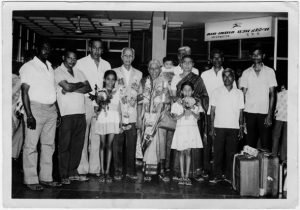
I was lucky enough to stay with my grandfather for a month in 1983, at Church Street, Meerut. It was the only time I met him and I was filled up with so many questions I had about my heritage. I am very proud of my Indian heritage and have visited India with my own family to give them a taste of their past. We now live all around the world, but Ireland is home.
9 Responses
Hi Simon,
I was just wondering if you are still active on this post as I would be interested in making contact as my mother lived in Meerut and she was an O’Brien. She also mentioned being related to the Gatelys.
Thank you.
David Walsh
Hi David,
Sorry for the delay in replying. I hadn’t realised that there were any comments relating to my post. In Ireland they’d call me an eejit.
I’d be delighted to share my knowledge of the family with you. I have alerted my cousin Rory O’Brien about your post, and his son, Finn, has written a wonderful account of the family in India. My email is simon@fillingdon.com if you’d like to get in touch.
Best wishes,
Simon
Hi David,
I am very glad to meet you after so long. My eeejit of an Irish cousin Simon has only just mentioned you and it would be great to follow up. What was your mother’s maiden name and date of Birth? If you would like to get in touch, my private email is rmob@obrien.nu
I liked your story – and your interest in searching your past. Worlds apart yet we have common feelings. Human feelings. Best.
Dear Dr Sadana,
Many thanks for your kind comments.
Best wishes,
Simon
Simon, I am going to try to find you a copy of the newspaper article you referred to above. I’ve already checked the following historical archives: The Times (London) and The Times of India. There do not seem to be any articles in September and October of 1947 authored by Ralph Izzard about Gandhi or any article mentioning the visit to Purana Qilla. Given that Izzard was employed by the Daily Mail at the time, its quite likely that the article was published there. I’m trying to get access to the Daily Mail archive for you. Will keep you posted. Let me know if you have any other leads.
Mr. Bhandari—please do add a post or contact me if you ever find the newspaper article mentioned in this post. It would be of great help to me in my research.
Sir–if you happen to find this article by Daily Mail, I would be very appreciative if you could send me any information about how to access it. I’d love to use it for my research
Dear Apoorva,
Apologies for waiting nine years to reply. Thank you for your kind note. I have had no luck tracing the article. I wonder did you make any further progress?
Best wishes,
Simon